And Fashion Brand: AI-Powered Visual Strategy in 2026
Discover how AI technology transforms and fashion brand marketing through dynamic visuals, virtual try-on, and data-driven storytelling strategies.
The relationship between technology and fashion brand development has reached an unprecedented level of sophistication in 2026. Fashion retailers now leverage artificial intelligence to create compelling visual narratives, streamline production workflows, and deliver personalized shopping experiences that resonate with increasingly discerning consumers. This technological evolution isn't merely about automation; it's fundamentally transforming how brands communicate their identity, showcase products, and connect with their target audiences across digital and physical channels.
The Evolution of Visual Content in Fashion Marketing
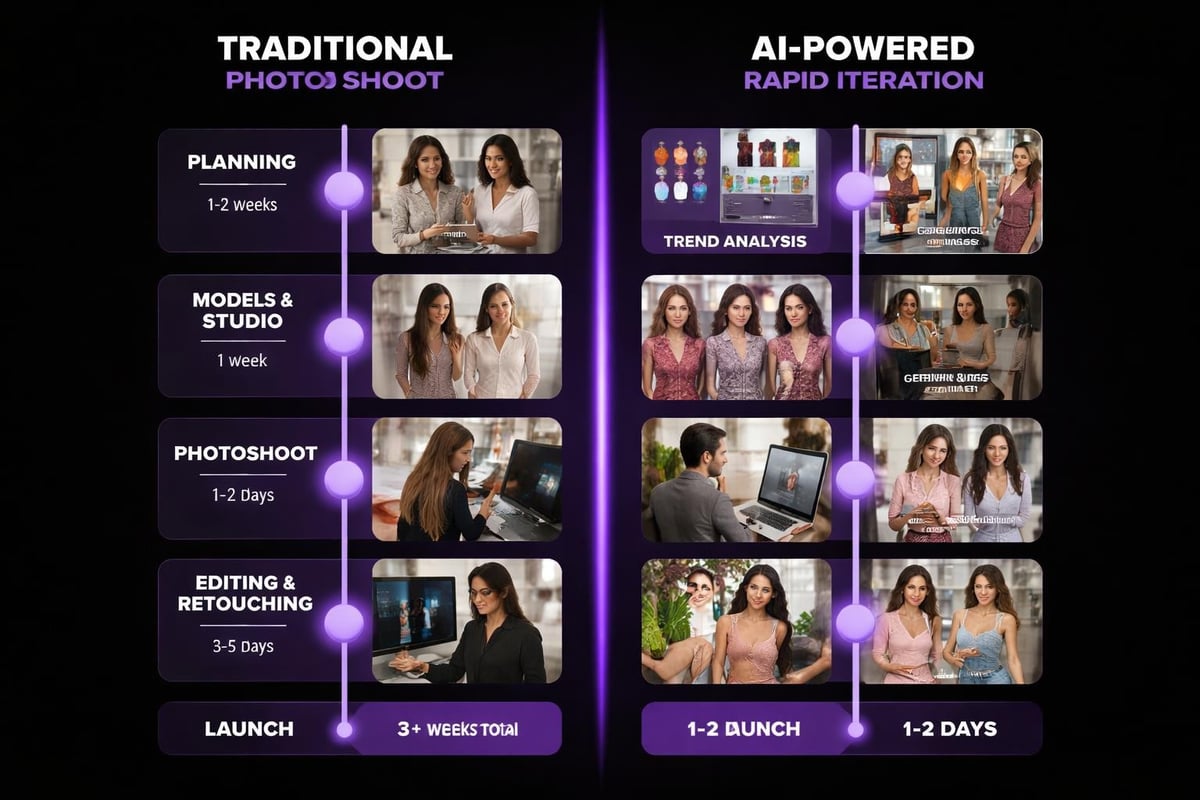
Fashion brands face mounting pressure to produce high-quality visual content at scale while maintaining authenticity and brand consistency. Traditional photography workflows require significant investments in models, photographers, studios, and post-production resources. This creates bottlenecks that slow product launches and limit creative experimentation.
AI-Powered Model Photography
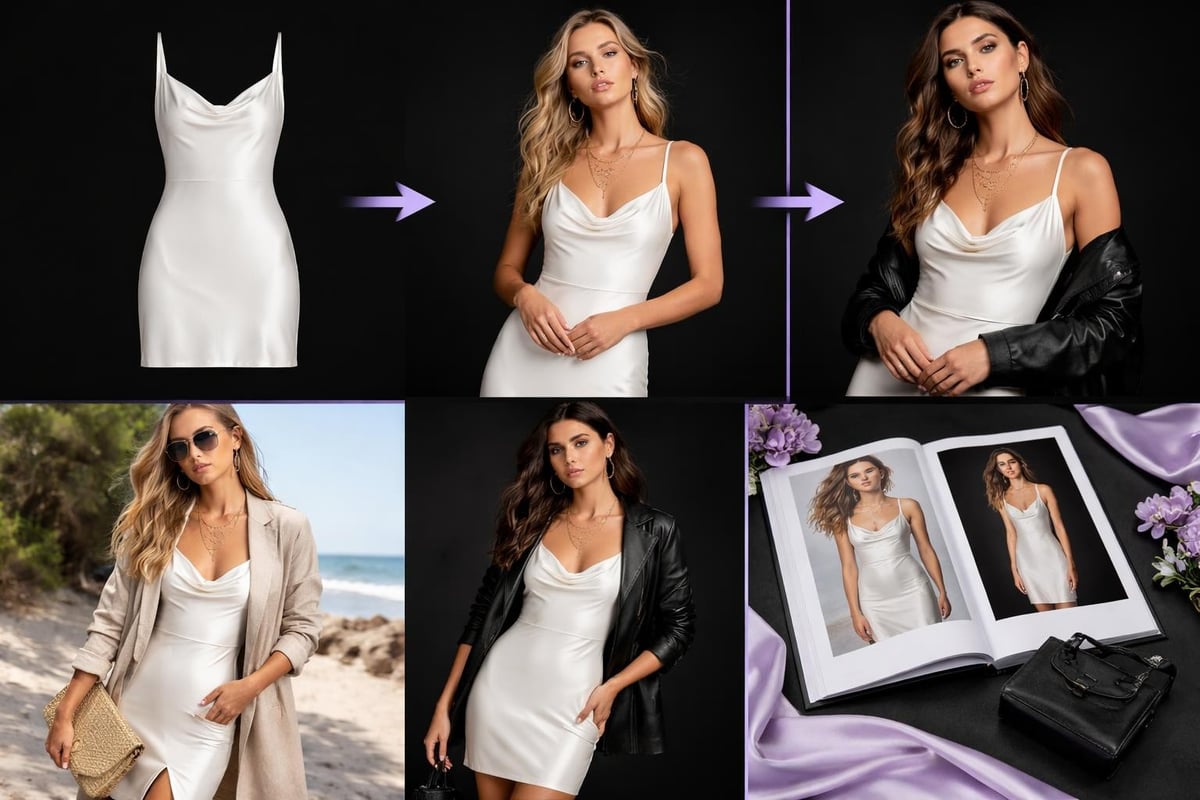
Modern AI solutions now enable brands to transform basic product packshots into professional model photography within minutes. This technological advancement addresses several critical challenges:
- Cost efficiency: Eliminating the need for multiple photoshoots reduces overhead by 60-80%
- Speed to market: Converting packshots to styled imagery in hours instead of weeks
- Creative flexibility: Testing multiple styling approaches without additional production costs
- Consistency: Maintaining uniform brand aesthetics across entire product catalogs
The impact extends beyond operational efficiency. Brands can now test diverse model representations, sizing options, and styling variations to determine what resonates most effectively with their audience before committing to large-scale production campaigns.
Dynamic Lookbook Creation
Creating compelling lookbooks traditionally required extensive planning, coordination, and budget allocation. An and fashion brand using AI technology can now generate comprehensive lookbooks that showcase products in context, demonstrate styling versatility, and tell cohesive brand stories. This capability proves particularly valuable for seasonal launches, capsule collections, and limited edition releases where timing is critical.
According to research on fashion marketing strategies, brands that invest in storytelling through visual content see significantly higher engagement rates and customer loyalty compared to those relying solely on product-focused imagery.
Personalization and Virtual Try-On Technology
The gap between online browsing and in-store shopping continues to narrow as virtual try-on capabilities become increasingly sophisticated. Customers expect to visualize how products will look on their specific body types, in their preferred styles, and within their existing wardrobes.
Building Customer Confidence
Virtual try-on technology addresses one of e-commerce's most persistent challenges: return rates driven by fit and appearance mismatches. When customers can see realistic representations of how garments fit different body types, purchase confidence increases measurably.
| Technology Feature | Customer Benefit | Business Impact |
|---|---|---|
| Virtual try-on | Realistic fit visualization | 30-40% reduction in returns |
| Size recommendation | Accurate sizing guidance | Increased conversion rates |
| Style matching | Personalized outfit suggestions | Higher average order value |
| AI model diversity | Inclusive representation | Expanded market reach |
The shift toward data-driven fashion retailing demonstrates that brands investing in personalization technologies consistently outperform competitors who rely on traditional one-size-fits-all approaches.
Sizing Accuracy and Fit Technology
An and fashion brand that implements AI-powered sizing recommendations reduces friction in the purchase journey. These systems analyze customer measurements, product specifications, and historical purchase data to suggest optimal sizes with remarkable accuracy. The technology accounts for variations between manufacturers, fabric stretch characteristics, and individual fit preferences.
This precision matters increasingly as customers shop across multiple brands and platforms. Consistent sizing experiences build trust and encourage repeat purchases, creating competitive advantages that extend beyond individual transactions.
Content Velocity and Market Responsiveness
Fashion markets move rapidly, with trends emerging and evolving across social platforms, street style, and cultural moments. Brands that respond quickly to shifting preferences capture disproportionate attention and sales.
Rapid Iteration Capabilities
AI-powered visual creation tools enable and fashion brand teams to test multiple creative directions simultaneously. When a new trend emerges, brands can generate styled imagery reflecting that aesthetic within hours, test audience response through digital channels, and refine their approach based on real-time engagement data.
Key advantages of rapid iteration include:
- Testing color variations across entire product lines
- Experimenting with styling approaches for different demographics
- Creating region-specific visual content for global markets
- Responding to cultural moments and seasonal shifts
- A/B testing visual narratives before committing to major campaigns
The ability to move at this velocity fundamentally changes strategic planning. Brands shift from predicting what will work to testing what works, making decisions based on evidence rather than assumptions.
Seasonal Launch Optimization
Traditional seasonal launches required brands to finalize visual content months in advance, creating inflexibility that often resulted in misalignment with market realities. Current technology allows for adaptive campaigns that evolve based on early performance indicators, weather patterns, and competitive dynamics.
An and fashion brand utilizing AI technology for fashion innovation can prepare multiple campaign variations, deploy initial content, analyze performance metrics, and shift resources toward the most effective creative approaches within the same season.
Storytelling Through Visual Narratives
The most successful fashion brands transcend product marketing to create emotional connections through storytelling. Visual narratives communicate brand values, lifestyle aspirations, and cultural positioning more effectively than written content alone.
Creating Cohesive Brand Worlds
AI tools enable consistent visual storytelling across all customer touchpoints. When every product image, lookbook page, and social media post reflects unified aesthetic principles, brands build recognizable identities that differentiate them in crowded markets.
As highlighted in research on fashion marketing fundamentals, compelling narratives enhance brand engagement and create the emotional resonance that drives customer loyalty beyond transactional relationships.
Cultural Relevance and Representation
An and fashion brand committed to inclusive representation can leverage AI technology to showcase products on diverse models representing various body types, ethnicities, ages, and style preferences. This inclusivity isn't merely ethical positioning; it expands addressable markets and resonates with consumers who increasingly expect brands to reflect their values.
The technology enables brands to create region-specific campaigns that respect cultural nuances while maintaining global brand consistency. A single product line can be presented through visual narratives tailored to Tokyo, Lagos, São Paulo, and Paris simultaneously, each reflecting local aesthetic preferences and cultural context.
Operational Efficiency and Resource Allocation
Beyond customer-facing benefits, AI technology transforms internal workflows and resource allocation strategies. Fashion brands operate with tighter margins as ultra-fast fashion and secondhand platforms disrupt traditional retail models, making operational efficiency increasingly critical to profitability.
Production Workflow Optimization
The Lumoo Studio services demonstrate how integrated AI solutions streamline workflows from initial product photography through final marketing asset delivery. This integration eliminates handoffs between disconnected systems, reduces quality control bottlenecks, and accelerates time-to-market.
Workflow improvements include:
- Automated image processing and enhancement
- Instant background removal and replacement
- Consistent color correction across product lines
- Automated sizing and formatting for multiple channels
- Integrated asset management and distribution
Strategic Resource Reallocation
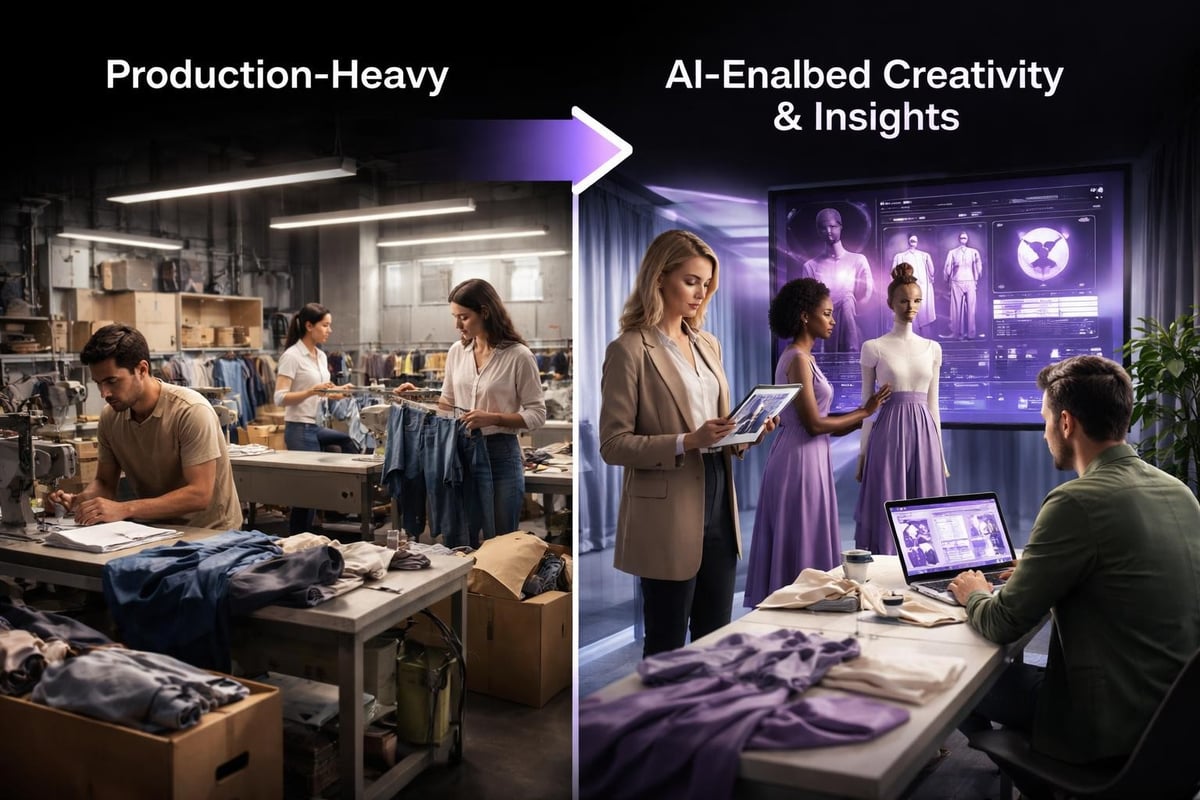
When operational tasks become automated, creative teams redirect their energy toward strategic initiatives that drive differentiation and innovation. Rather than managing photoshoot logistics, designers and marketers focus on trend analysis, customer insights, and creative experimentation.
| Traditional Model | AI-Enhanced Model |
|---|---|
| 70% execution, 30% strategy | 30% execution, 70% strategy |
| Limited testing capacity | Extensive A/B testing |
| Reactive to trends | Proactive trend creation |
| Resource-constrained creativity | Scalable creative output |
This reallocation fundamentally changes what's possible for brands with limited resources, democratizing capabilities previously available only to major retailers with substantial production budgets.
Data-Driven Decision Making
An and fashion brand implementing AI technology gains access to unprecedented data about visual content performance, customer preferences, and market trends. This intelligence informs decisions across product development, inventory management, and marketing strategy.
Performance Analytics and Optimization
Every AI-generated image becomes a data point revealing customer preferences. Which styling approaches generate the highest engagement? Which model characteristics drive conversions? How do color variations perform across demographic segments? These insights accumulate into strategic intelligence that guides future decisions.
Advanced analytics track performance metrics including:
- Click-through rates by visual style
- Conversion rates across model variations
- Engagement patterns by demographic segment
- Geographic performance differences
- Seasonal trend correlations
Predictive Trend Analysis
By analyzing performance patterns across thousands of visual variations, AI systems identify emerging preferences before they reach mainstream awareness. An and fashion brand can spot rising interest in specific silhouettes, color palettes, or styling approaches, informing product development and inventory decisions months ahead of competitors relying on traditional market research.
Integration with E-Commerce Platforms
The value of AI-generated visual content multiplies when seamlessly integrated with e-commerce infrastructure. Product pages, recommendation engines, email campaigns, and social media channels all benefit from consistent, high-quality imagery that adapts to context and audience.
Omnichannel Consistency
Customers interact with brands across numerous touchpoints, expecting consistent experiences whether browsing on mobile apps, desktop websites, social platforms, or in physical stores. AI technology ensures visual consistency while optimizing content for each channel's specific requirements and audience behaviors.
An and fashion brand can automatically generate appropriately formatted assets for Instagram posts, Pinterest boards, email newsletters, website product pages, and digital advertisements from a single source image, maintaining brand consistency while respecting platform-specific best practices.
Conversion Optimization
E-commerce conversion rates depend heavily on product presentation quality and relevance. AI systems analyze individual customer behavior patterns to serve the most effective visual content for each visitor. Returning customers might see products styled consistently with previous purchases, while new visitors receive imagery aligned with broader demographic preferences.
Sustainability and Waste Reduction
The fashion industry faces increasing pressure to address environmental impacts. While much attention focuses on manufacturing and logistics, content creation also carries environmental costs through travel, physical samples, and resource-intensive production processes.
Digital-First Content Creation
An and fashion brand utilizing AI for visual content significantly reduces the environmental footprint associated with traditional photography. Fewer physical samples need production for photoshoots, less travel is required for location photography, and digital iteration replaces wasteful physical prototyping.
Environmental benefits include:
- Reduced sample production and shipping
- Eliminated travel for location shoots
- Decreased studio energy consumption
- Minimized physical waste from props and sets
- Lower carbon footprint per marketing asset
Longevity and Reusability
AI-generated assets prove more adaptable and reusable than traditional photography. Background changes, seasonal updates, and styling modifications happen digitally without requiring new photoshoots. This extends content lifecycle and reduces the need for constant new production.
Competitive Differentiation in Saturated Markets
Fashion retail grows increasingly competitive as barriers to entry decrease and customer attention fragments across platforms. An and fashion brand needs distinctive positioning that resonates with target audiences while remaining operationally sustainable.
Visual Identity as Competitive Advantage
Brands that leverage AI technology create visual content at scales and speeds impossible for competitors using traditional methods. This volume advantage enables comprehensive A/B testing, rapid trend response, and personalized customer experiences that build loyalty and drive word-of-mouth growth.
The consistency achievable through AI systems also strengthens brand recognition. When every customer touchpoint reflects cohesive visual principles, brands build distinctive identities that stand out in crowded social media feeds and search results.
Agility in Market Positioning
Markets shift rapidly based on cultural movements, economic conditions, and competitive actions. An and fashion brand with agile content creation capabilities can pivot positioning, test new market segments, and experiment with sub-brands without the resource commitments that traditionally made such moves prohibitively risky.
Future Developments and Emerging Capabilities
The AI technology powering fashion visual content continues advancing rapidly. What seems sophisticated in 2026 will appear primitive within months as capabilities expand and new applications emerge.
Video and Motion Content
Static imagery gives way to video as the dominant content format across social platforms and e-commerce sites. AI systems now generate model videos, product demonstrations, and styled lookbook animations from the same packshot inputs used for static images. This capability extends brand storytelling potential while maintaining the efficiency advantages of AI-powered workflows.
Interactive and Immersive Experiences
Augmented reality try-on experiences, virtual fashion shows, and immersive brand environments represent the next frontier. An and fashion brand investing in AI foundations today positions itself to adopt these emerging capabilities as they mature, while competitors locked into legacy workflows struggle to transition.
The potential impacts of AI and metaverse integration suggest fundamental transformations in how customers discover, evaluate, and purchase fashion products over the coming years.
AI technology has fundamentally transformed how fashion brands create, distribute, and optimize visual content in 2026. The competitive advantages extend across operational efficiency, creative capability, customer experience, and market responsiveness. For brands seeking to elevate their visual storytelling while maintaining sustainable operations, Lumoo Studio offers comprehensive AI-powered solutions that transform packshots into professional model imagery, create engaging lookbooks, and enable the dynamic visual content strategies that define successful and fashion brand marketing in the modern landscape.