Fashion Model Images: Evolution and AI Innovation
Discover how fashion model images shape brand identity and how AI technology transforms product photography into engaging visual content.
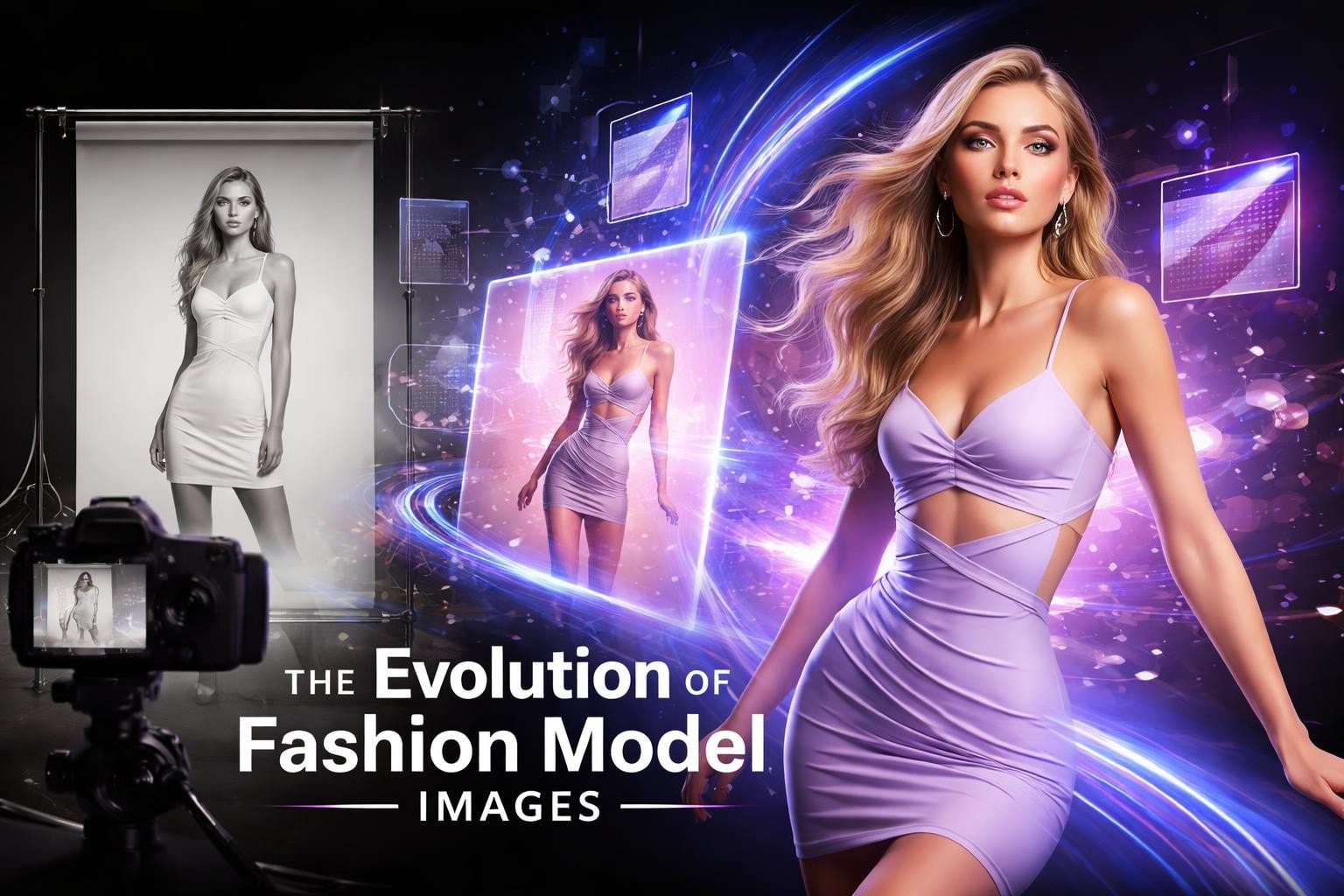
Fashion model images have been the cornerstone of fashion marketing for nearly a century, shaping how consumers perceive brands and make purchasing decisions. From the earliest days of Lisa Fonssagrives' pioneering work in fashion photography to today's AI-powered visual content creation, these images continue to evolve in both form and function. As digital commerce accelerates and consumer expectations rise, brands face mounting pressure to produce high-quality, diverse fashion model images at unprecedented scales. This challenge has sparked a revolution in how fashion imagery is created, distributed, and optimized for modern retail environments.
The Historical Significance of Fashion Model Images
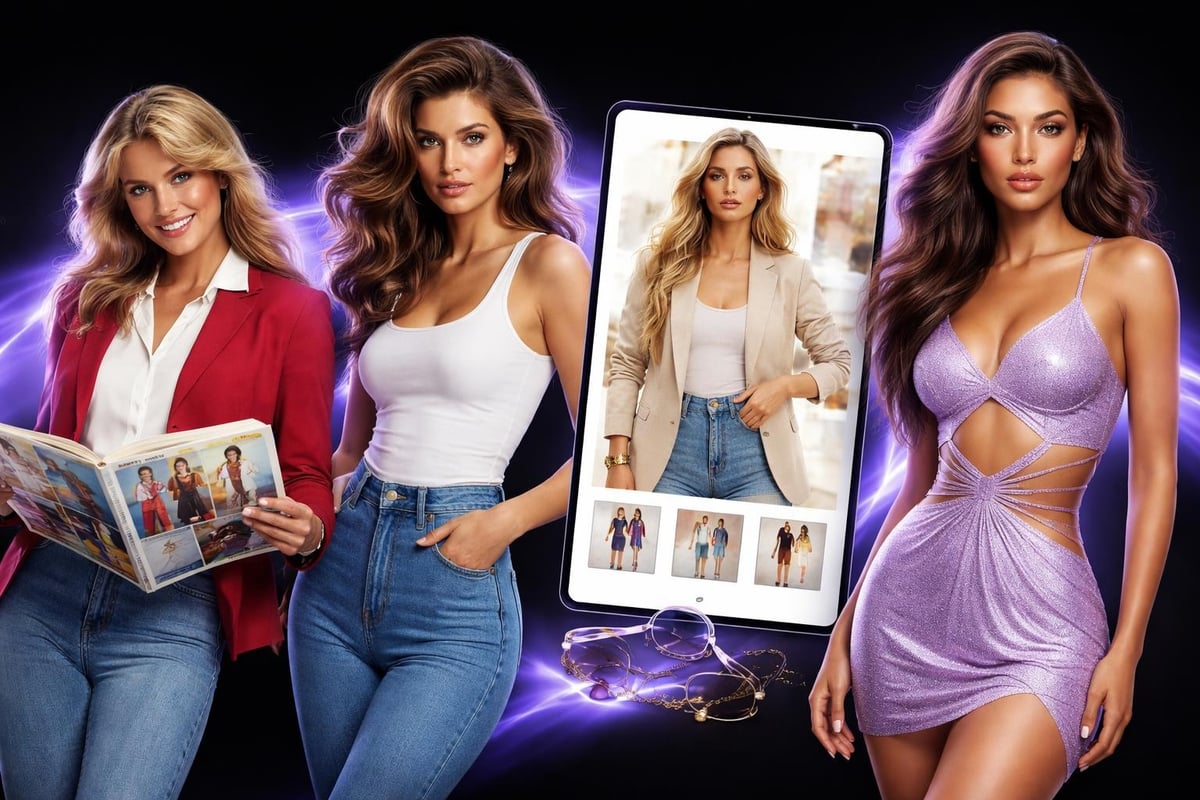
Fashion model images emerged as a distinct art form in the early twentieth century, transforming from simple catalog illustrations into powerful cultural statements. The industry witnessed its first golden age when supermodels became household names, their images gracing magazine covers and advertising campaigns worldwide.
The iconic 1989 photograph featuring Stephanie Seymour, Cindy Crawford, and other supermodels marked a pivotal moment when fashion model images transcended mere product photography to become cultural phenomena. This shift demonstrated how model imagery could build brand equity and create emotional connections with consumers.
Cultural Impact and Brand Building
Fashion model images serve multiple strategic purposes beyond simply displaying clothing:
- Brand identity establishment through consistent visual aesthetics
- Emotional storytelling that connects products to lifestyle aspirations
- Social proof demonstrating how garments look on human figures
- Cultural relevance aligning brands with contemporary values and movements
- Purchase confidence reducing uncertainty about fit and appearance
The Metropolitan Museum of Art's 2009 exhibition "The Model as Muse" examined how models themselves became integral to fashion's creative process, influencing designers and photographers while shaping public taste.
Current Challenges in Fashion Model Photography
Producing fashion model images traditionally requires substantial resources and coordination. Brands today face numerous obstacles that impact both budget and operational efficiency.
Production Constraints and Costs
Traditional photo shoots involve complex logistics and significant financial investment. A single session typically requires:
| Resource Category | Components | Typical Costs |
|---|---|---|
| Personnel | Models, photographers, stylists, makeup artists | $5,000-$50,000 |
| Location | Studio rental, permits, equipment | $2,000-$15,000 |
| Post-Production | Editing, retouching, color correction | $1,500-$10,000 |
| Coordination | Scheduling, contracts, planning | $1,000-$5,000 |
These expenses multiply across seasonal collections, diverse model representation, and multiple marketing channels.
Diversity and Representation Requirements
Modern consumers expect fashion model images to reflect authentic diversity in body types, ethnicities, ages, and gender expressions. Meeting these expectations through traditional photography creates compounding challenges:
- Booking diverse model portfolios across multiple shoots
- Managing increased production schedules
- Maintaining visual consistency across varied campaigns
- Responding quickly to changing cultural conversations
Brands committed to inclusive representation often struggle to balance authenticity with budget limitations.
Speed to Market Pressures
Fashion operates on accelerating cycles, with fast-fashion brands releasing new collections weekly rather than seasonally. This tempo demands rapid production of fashion model images, often creating bottlenecks between product creation and marketing launch.
The gap between receiving inventory and producing marketing assets can span weeks or months with traditional photography, delaying revenue opportunities and reducing competitive responsiveness.
The Role of AI in Modern Fashion Imagery
Artificial intelligence has emerged as a transformative force in creating fashion model images, addressing many traditional constraints while opening new creative possibilities. AI-powered solutions from companies like Lumoo Studio enable brands to generate professional model photography from simple product shots.
Technical Foundations
The development of comprehensive fashion datasets has enabled AI systems to understand garment attributes, styling conventions, and visual aesthetics. These machine learning models analyze thousands of fashion model images to learn patterns in pose, lighting, composition, and styling.
Advanced AI systems utilize multiple technological approaches:
- Computer vision to understand garment structure and features
- Generative models to create realistic human figures and poses
- Style transfer to apply consistent brand aesthetics
- Semantic segmentation to separate products from backgrounds
- Quality enhancement to optimize resolution and details
Research initiatives like ModaNet's street fashion dataset have provided the foundational data necessary for training robust AI models that understand real-world fashion context.
Practical Applications for Brands
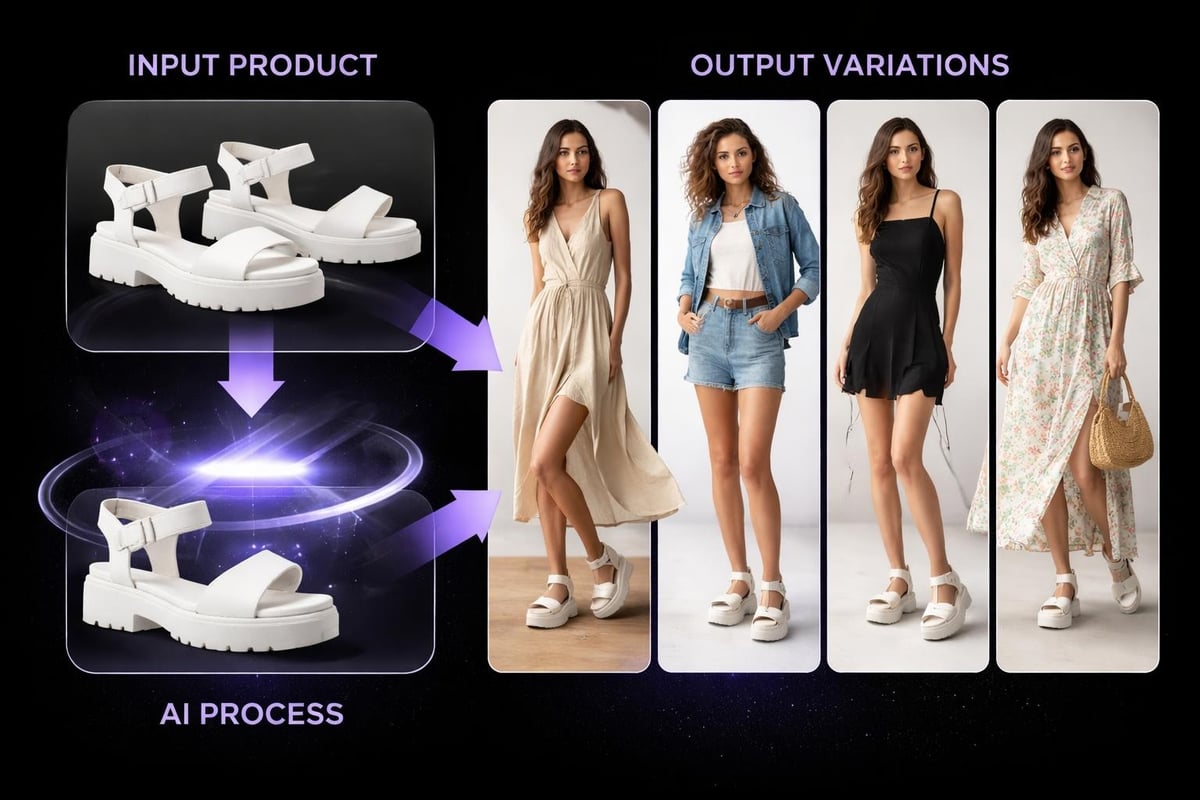
AI-generated fashion model images offer brands unprecedented flexibility in visual content creation. Rather than scheduling separate shoots for each marketing channel, brands can transform a single product photograph into multiple styled model images.
Key capabilities include:
- Converting flat product photography into styled on-model images
- Generating diverse model representations from one base image
- Creating seasonal variations without additional shoots
- Testing multiple styling approaches before physical production
- Producing localized content for different markets
The Fashionpedia dataset demonstrates how detailed apparel annotations enable AI systems to understand garment components, allowing for sophisticated manipulation and realistic rendering in generated images.
Strategic Benefits for Fashion Retailers
Fashion model images powered by AI technology deliver measurable advantages across marketing, operations, and customer experience. These benefits extend beyond cost savings to fundamentally reshape how brands approach visual merchandising.
Operational Efficiency Gains
Brands implementing AI-generated fashion model images report dramatic improvements in production timelines and resource allocation. What previously required weeks of planning, shooting, and editing can now occur in days or hours.
| Traditional Process | AI-Enhanced Process | Time Reduction |
|---|---|---|
| 4-6 weeks concept to completion | 3-5 days concept to completion | 85-90% |
| Single model per shoot | Unlimited model variations | Unlimited scaling |
| Fixed poses and angles | Multiple poses per product | 300-500% increase |
| Location-dependent | Fully digital workflow | 100% flexibility |
This efficiency enables brands to maintain fresh, current content across all customer touchpoints without proportional increases in marketing budgets.
Enhanced Customer Experience
Fashion model images that showcase products on diverse body types and in varied contexts improve customer confidence and reduce return rates. When shoppers see garments on models who resemble them, they make more informed purchasing decisions.
AI-powered systems enable brands to show the same garment across:
- Multiple body types and sizes
- Different styling contexts (casual, formal, athletic)
- Seasonal variations and color options
- Complementary product combinations
This comprehensive visual representation addresses the primary limitation of online shopping: the inability to try products before purchase.
Market Responsiveness and Testing
The Fashion-Gen dataset exemplifies how high-quality fashion images paired with detailed descriptions enable rapid content iteration. Brands can test multiple visual approaches, measure engagement, and optimize before committing to large-scale production.
Fashion model images generated through AI allow for:
- A/B testing different styling approaches with minimal cost
- Rapid seasonal updates without reshooting entire collections
- Localized content tailored to regional preferences
- Trend responsiveness adjusting imagery to emerging styles
- Micro-segmentation creating targeted visuals for specific audiences
Quality Considerations and Best Practices
While AI-generated fashion model images offer substantial advantages, maintaining quality and authenticity requires strategic implementation. Brands must balance automation with editorial oversight to ensure visual content aligns with brand standards.
Maintaining Visual Consistency
Successful deployment of AI-generated fashion model images depends on establishing clear brand guidelines that govern:
- Lighting aesthetics and color grading
- Model pose libraries and composition rules
- Background environments and contexts
- Styling conventions and accessory choices
- Quality thresholds for automated acceptance
Advanced platforms like those offered by Lumoo Studio's services enable brands to encode these preferences into the generation process, ensuring consistency across thousands of images.
Authenticity and Consumer Trust
Fashion model images must balance technical quality with emotional authenticity. Consumers increasingly value genuine representation over unrealistic perfection, making it essential that AI-generated content reflects realistic proportions and diverse beauty standards.
Best practices include:
- Using diverse training datasets to avoid bias
- Implementing quality controls for realistic rendering
- Maintaining transparency about content creation methods when appropriate
- Regularly auditing output for cultural sensitivity
- Gathering customer feedback on visual representation
The relationship between fashion modeling and body image underscores the responsibility brands carry when creating visual content that influences consumer self-perception.
Integration with Existing Workflows
Fashion model images generated through AI technology integrate seamlessly with existing marketing and e-commerce infrastructure. Successful implementation requires strategic planning around content management, creative workflows, and team training.
Content Production Pipeline
Modern fashion brands operate complex content ecosystems spanning e-commerce platforms, social media, email marketing, print catalogs, and retail displays. AI-generated fashion model images must flow efficiently through these channels while maintaining format, resolution, and quality requirements.
Typical integration workflow:
- Product photography and cataloging in existing DAM systems
- AI processing to generate model imagery variations
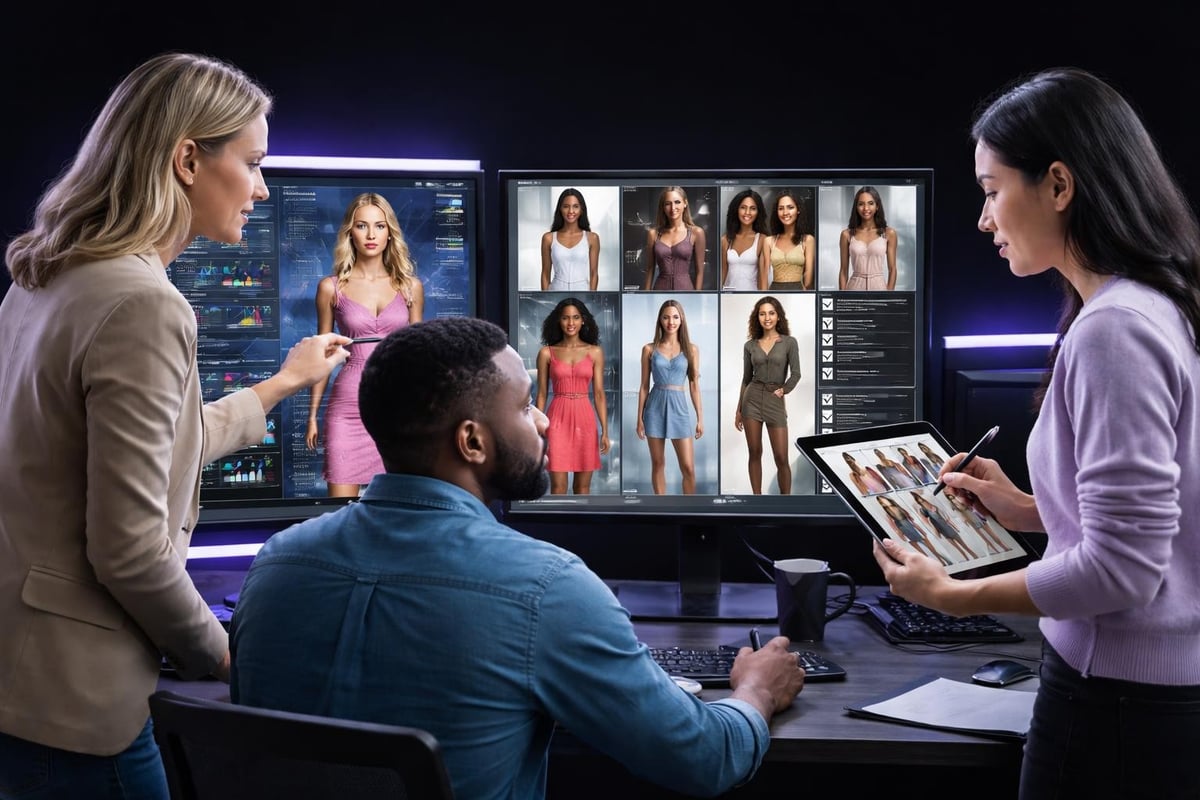
- Editorial review and selection of preferred outputs
- Automated resizing and optimization for distribution channels
- Deployment to e-commerce, marketing, and social platforms
- Performance tracking and iteration based on engagement metrics
This pipeline reduces manual handoffs while preserving creative control at critical decision points.
Team Structure and Skill Development
Implementing AI-generated fashion model images doesn't eliminate creative roles but rather redirects them toward strategic and curatorial functions. Photography teams evolve from production-focused roles to quality oversight and creative direction.
Organizations benefit from:
- Training photographers in AI tool utilization and prompt engineering
- Developing stylist expertise in virtual composition and digital aesthetics
- Building technical skills in DAM integration and workflow automation
- Creating hybrid roles combining creative judgment with technical proficiency
This evolution allows creative talent to focus on high-value activities like brand strategy and campaign concepts rather than repetitive production tasks.
Performance Metrics and ROI Analysis
Fashion model images represent significant marketing investments, making performance measurement essential for optimization and budget allocation. AI-generated content enables more sophisticated tracking and attribution than traditional photography.
Quantifiable Business Outcomes
Brands implementing AI-powered fashion model images typically measure impact across several dimensions:
| Metric Category | Key Indicators | Typical Improvements |
|---|---|---|
| Production Efficiency | Time to market, cost per image | 60-80% reduction |
| Engagement | Click-through rates, time on page | 25-45% increase |
| Conversion | Add-to-cart rate, purchase completion | 15-30% improvement |
| Returns | Return rates, fit-related returns | 10-20% decrease |
| Content Volume | Images per product, channel coverage | 300-500% expansion |
These improvements compound over time as brands refine their AI implementation and optimize based on performance data.
Attribution and Testing Frameworks
The ability to rapidly generate fashion model images variations enables sophisticated multivariate testing previously impossible due to production constraints. Brands can isolate the impact of specific visual elements on consumer behavior.
Testing variables include:
- Model diversity and representation
- Styling complexity and accessorization
- Background context and environment
- Pose dynamics and product presentation
- Seasonal variations and trend alignment
This data-driven approach transforms fashion imagery from an art-based discipline to a science-informed creative practice, combining aesthetic judgment with empirical validation.
Future Developments in Fashion Visual Content
Fashion model images continue to evolve as AI technology advances and consumer expectations shift. Emerging capabilities promise even greater flexibility, personalization, and integration across the customer journey.
Personalization and Dynamic Content
Next-generation systems will generate fashion model images tailored to individual consumer preferences, showing products on models who match the shopper's body type, style preferences, and cultural context. This hyper-personalization addresses fashion's fundamental challenge: helping diverse consumers visualize how products will look on them.
Advanced implementations will enable:
- Real-time generation based on browsing behavior
- Personalized lookbooks combining owned and complementary products
- Virtual try-on experiences with realistic rendering
- Size-specific visualization showing garment fit on similar body types
These capabilities transform static product imagery into dynamic, responsive content that adapts to each customer interaction.
Immersive and Interactive Experiences
Fashion model images are expanding beyond two-dimensional photography into three-dimensional, interactive, and video formats. AI technology enables brands to create comprehensive visual assets from minimal input, supporting emerging retail experiences like augmented reality fitting rooms and virtual showrooms.
The trajectory points toward fully integrated visual ecosystems where a single product design generates all necessary marketing assets automatically, from hero images to social videos to AR try-on models, maintaining perfect consistency while optimizing for each channel's unique requirements.
Fashion model images have evolved from artistic photography to strategic business assets that directly impact conversion, customer satisfaction, and brand perception. Modern AI technology addresses the traditional constraints of cost, diversity, and speed while enabling unprecedented personalization and testing capabilities. Lumoo Studio empowers fashion and retail brands to transform simple product photography into engaging, diverse fashion model images that resonate with target audiences across all marketing channels. By combining advanced AI technology with fashion industry expertise, brands can elevate their visual storytelling, accelerate time to market, and create authentic connections with customers at scale.