Personalized Fashion: Technology-Driven Customization
Discover how AI and technology are transforming personalized fashion. Learn strategies brands use to deliver customization at scale in 2026.

The fashion industry has entered a new era where mass production no longer satisfies consumer demands for uniqueness and self-expression. Today's shoppers expect clothing that reflects their individual style, fits their specific body measurements, and aligns with their personal values. Personalized fashion has evolved from a luxury offering available only to high-end clientele into a mainstream expectation powered by artificial intelligence, advanced manufacturing, and data-driven insights. Brands that embrace this transformation are not only meeting customer expectations but also building stronger connections with their audiences through tailored experiences that resonate on a deeply personal level.
The Evolution of Personalized Fashion in Modern Retail
The concept of personalized fashion has transformed dramatically over the past decade. What once required expensive tailors and extensive consultations now happens through sophisticated algorithms and digital interfaces. Product customization has become increasingly popular, with consumers seeking monogrammed accessories, custom-embroidered garments, and made-to-order pieces that express their individuality.
This shift reflects broader changes in consumer behavior. Modern shoppers view their clothing choices as extensions of their identity rather than simply following seasonal trends. The technology enabling this transformation includes AI-powered recommendation engines, virtual fitting rooms, and on-demand manufacturing systems that can produce unique items without the traditional economies of scale.
Key Drivers Behind the Personalization Movement
Several factors have accelerated the adoption of personalized fashion across the industry:
- Consumer demand for uniqueness in an era of fast fashion homogeneity
- Advanced AI capabilities that analyze style preferences and body measurements
- Flexible manufacturing technologies enabling small-batch and single-item production
- Digital touchpoints that collect preference data across customer journeys
- Social media influence showcasing individual style over trend conformity
The convergence of these elements has created an environment where brands can feasibly offer customization options that were economically impossible just a few years ago. Gen Z consumers particularly embrace hyper-personalized styles, using fashion as a primary means of self-expression and rejecting one-size-fits-all approaches.
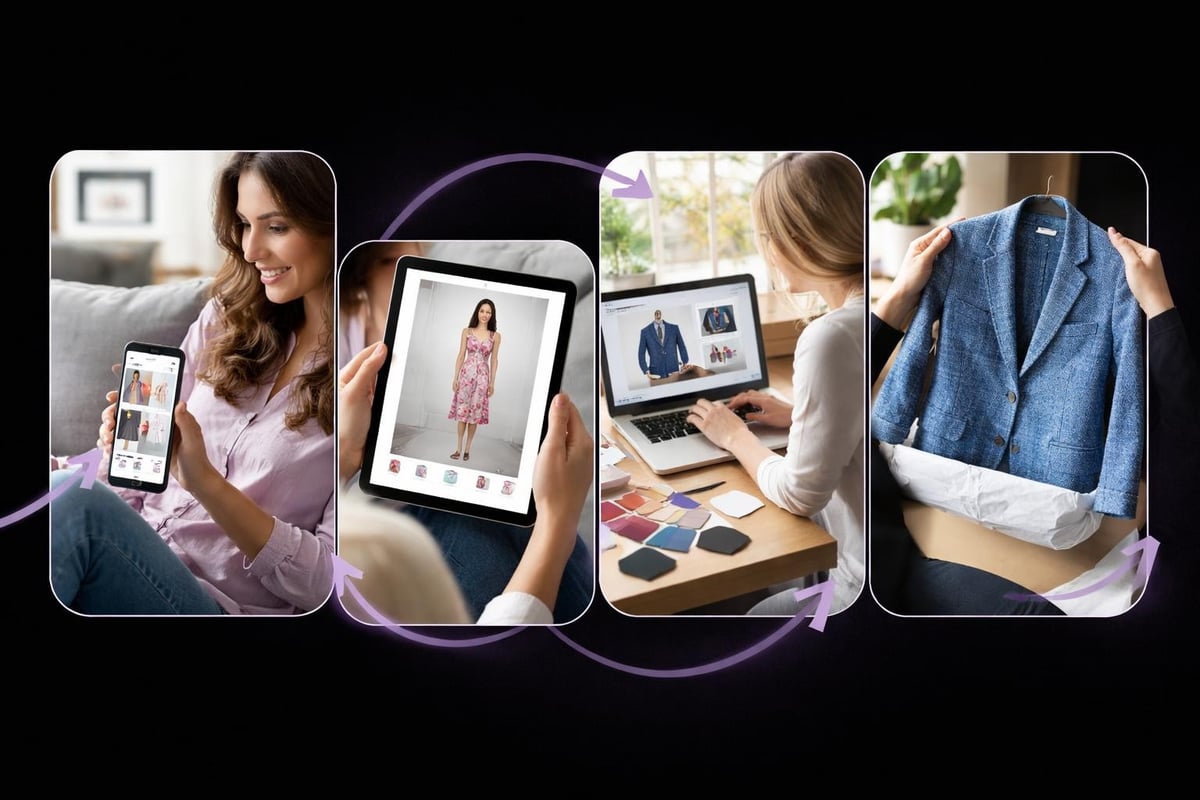
AI-Powered Technologies Enabling Fashion Customization
Artificial intelligence serves as the backbone of modern personalized fashion initiatives. These systems process vast amounts of data to understand individual preferences, predict style compatibility, and generate recommendations that feel genuinely tailored to each customer.
Virtual Try-On and Fitting Solutions
Virtual try-on technology has revolutionized how consumers experience personalized fashion before making purchases. These systems use computer vision and augmented reality to show how garments will look on individual body types, reducing return rates while increasing customer confidence.
AI-driven product recommendations and virtual fitting rooms have become standard features for forward-thinking retailers. The technology analyzes customer photos or measurements to create accurate digital representations, allowing shoppers to visualize fit and style without physical try-ons.
| Technology | Functionality | Personalization Benefit |
|---|---|---|
| Virtual Try-On | AR overlay of garments on customer images | Visualize fit and style on actual body |
| AI Sizing | Body measurement analysis and fit prediction | Accurate size recommendations per brand |
| Style Engines | Preference learning algorithms | Curated product suggestions matching taste |
| Visual Search | Image-based product discovery | Find exact styles from inspiration photos |
The advanced features available through AI fashion platforms enable brands to create dynamic visuals and styled model images that showcase how garments adapt to different body types and styling preferences. This capability transforms standard product photography into personalized shopping experiences.
Design Customization Through AI
Beyond fit and recommendations, AI now enables customers to participate in the design process itself. Recent innovations include 3D sketch-driven garment generation frameworks that allow users to create personalized digital clothing through simple sketches in AR/VR environments, democratizing fashion design for consumers without technical expertise.
These systems interpret customer input and generate production-ready designs that can move directly into manufacturing. The technology bridges the gap between creative vision and physical product, making truly one-of-a-kind garments accessible at scale.
Data-Driven Personalization Strategies for Fashion Brands
Successful personalized fashion initiatives rely on sophisticated data collection and analysis strategies. Brands must gather insights across multiple touchpoints while respecting privacy concerns and building trust with their customers.
Building Comprehensive Customer Profiles
Effective personalization requires understanding customers across several dimensions:
- Style preferences gathered from browsing behavior and purchase history
- Body measurements and fit requirements collected through sizing tools
- Color and pattern affinities identified through visual engagement metrics
- Price sensitivity and value perception analyzed through conversion data
- Lifestyle context inferred from usage occasions and complementary purchases
This multi-dimensional approach enables brands to move beyond basic segmentation toward truly individualized experiences. The challenge lies in collecting this information seamlessly throughout the customer journey without creating friction or privacy concerns.
Implementing Intelligent Recommendation Systems
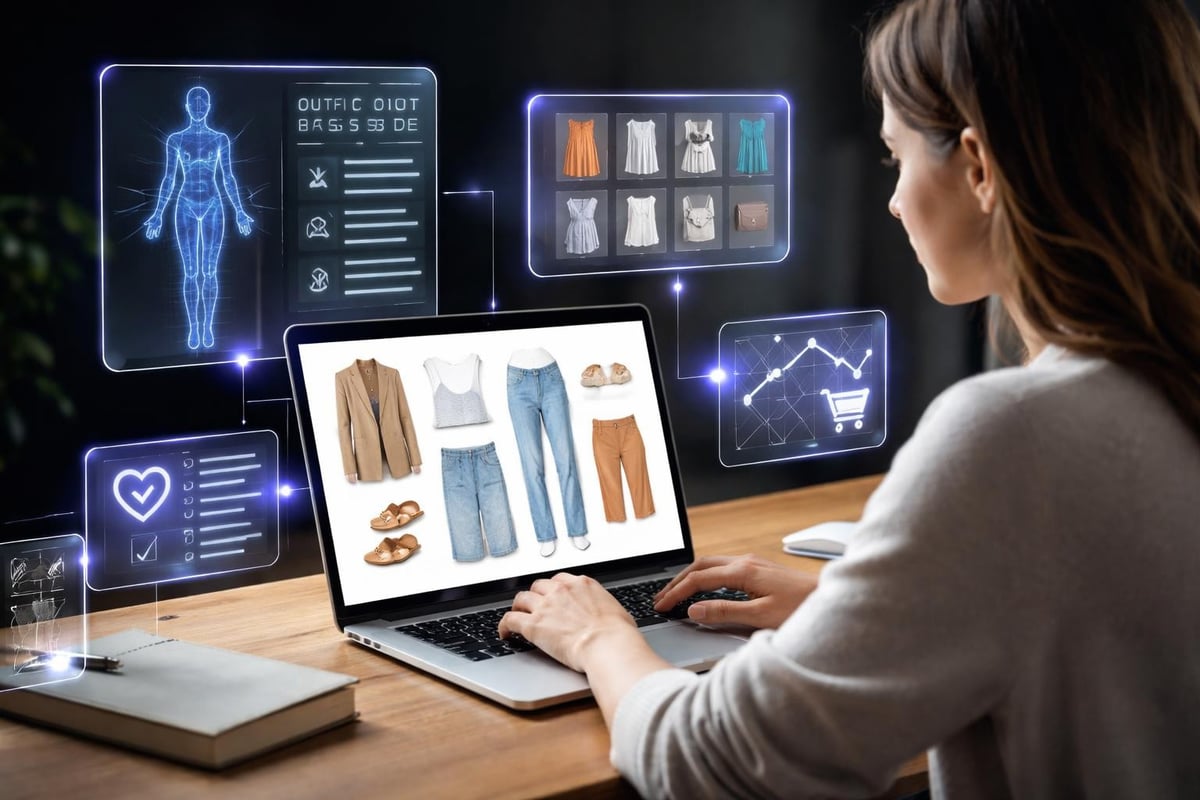
Advanced frameworks like StyleTailor integrate personalized apparel design, shopping recommendations, and virtual try-on capabilities through collaborative agent systems. These platforms process multi-level feedback to refine suggestions continuously, learning from both explicit customer input and implicit behavioral signals.
The most sophisticated systems combine multiple data sources:
- Collaborative filtering that identifies patterns across similar customers
- Content-based analysis examining product attributes and customer preferences
- Contextual awareness considering seasonal trends, occasions, and current inventory
- Visual similarity matching connecting products through style elements rather than categories
Manufacturing and Supply Chain Innovations
Personalized fashion requires fundamental changes to traditional manufacturing and logistics operations. Brands must balance customization capabilities with production efficiency and cost management.
On-Demand Production Models
Smart factories and on-demand manufacturing enable rapid, flexible production tailored to individual preferences. These facilities use automated cutting, digital printing, and robotic assembly to produce customized items economically, even in quantities of one.
The shift from forecast-driven to demand-driven production offers several advantages:
- Reduced inventory waste by producing only confirmed orders
- Faster response to emerging trends and customer requests
- Lower capital requirements without large seasonal inventory investments
- Environmental benefits from eliminating overproduction
| Traditional Manufacturing | On-Demand Personalization |
|---|---|
| Seasonal bulk production | Individual order fulfillment |
| 3-6 month lead times | 1-2 week production cycles |
| High inventory carrying costs | Minimal finished goods inventory |
| Size/color forecasting risk | Customer-selected specifications |
| Limited customization options | Extensive personalization parameters |
Managing Customization Complexity
While personalized fashion offers competitive advantages, it introduces operational complexity that brands must manage carefully. Each customization option multiplies SKU complexity and requires careful systems integration.
Successful brands limit customization to specific parameters that deliver meaningful customer value without overwhelming operations. This might include size customization, color selection, monogramming, or specific design elements rather than unlimited free-form options.
Customer Experience Design for Personalization
The interface through which customers experience personalized fashion significantly impacts adoption and satisfaction. Brands must design intuitive, engaging customization journeys that feel empowering rather than overwhelming.
Simplifying Complex Choices
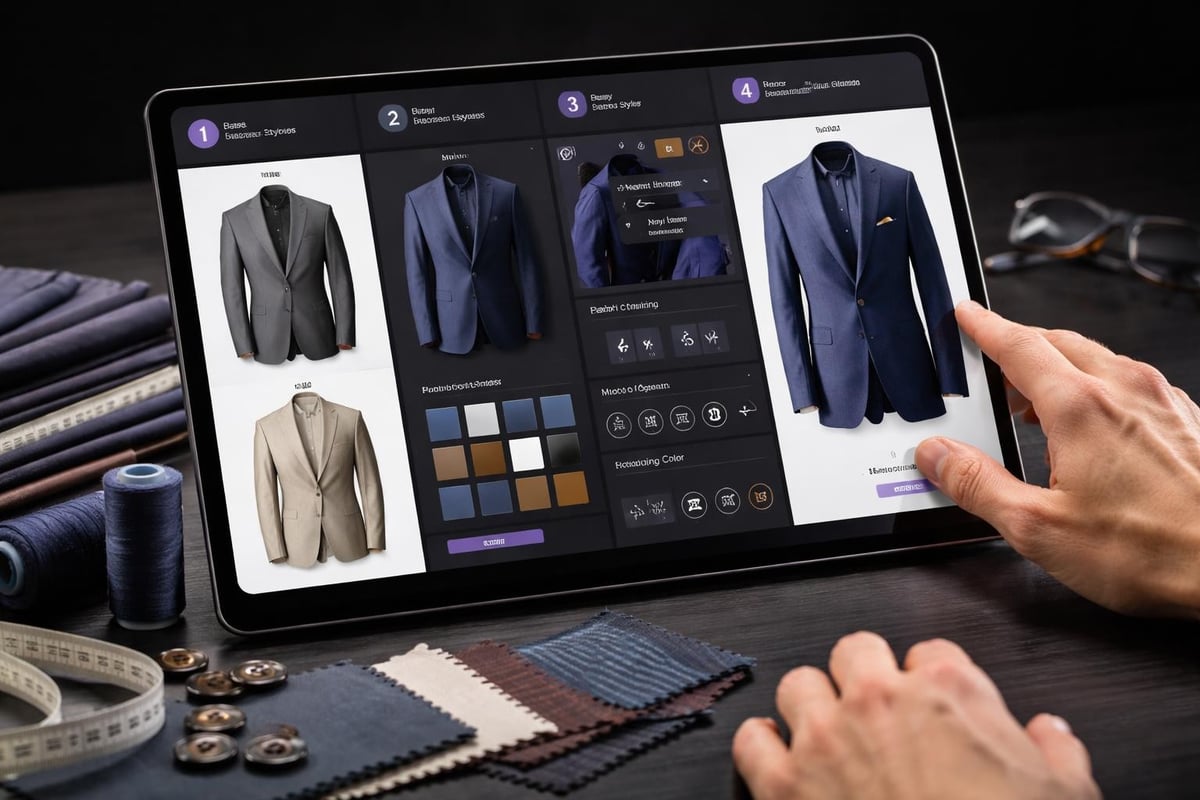
Research shows that too many options can paralyze decision-making rather than enhance it. Effective personalized fashion experiences guide customers through choices progressively:
- Start with broad preferences like style category or use occasion
- Refine through visual selections showing concrete examples rather than abstract options
- Offer intelligent defaults based on previous choices and similar customers
- Provide clear visualization of customization impacts on final product
- Enable easy revision of decisions without starting over
The goal is creating a sense of creative control without requiring design expertise or overwhelming time investment.
Leveraging Visual Storytelling
Creating engaging lookbooks that showcase personalization possibilities helps customers envision how customized pieces fit into their wardrobes. Visual storytelling transforms abstract customization options into concrete style inspiration that drives engagement and conversion.
Brands can demonstrate personalized fashion through:
- Diverse model representation showing how styles adapt to different body types
- Lifestyle context photography illustrating garments in real-world situations
- Before-and-after customization examples highlighting transformation potential
- User-generated content featuring actual customer creations
- Interactive configurators with real-time visual updates
Advanced Personalization Techniques Shaping 2026
The frontier of personalized fashion continues expanding with emerging technologies that promise even deeper customization capabilities.
Text-Based Fashion Customization
Innovations like Fashion-RAG enable customization based on user preferences provided in textual form, utilizing retrieval-augmented generation for personalized fashion image editing. Customers can describe desired modifications in natural language, and AI systems interpret these requests to generate customized designs.
This approach removes technical barriers to personalization, allowing anyone to articulate their vision without understanding design terminology or software. The system translates intent into actionable modifications that respect garment construction and aesthetic coherence.
Multi-Step Outfit Recommendations
Moving beyond individual product suggestions, knowledge-guided methods for multi-step outfit recommendation integrate professional styling expertise with personalized preferences. These systems consider how pieces work together, suggesting complete looks rather than isolated items.
The technology addresses a common personalized fashion challenge: customers can identify pieces they like individually but struggle to assemble coherent outfits. AI styling assistants bridge this gap by applying fashion expertise at scale while respecting individual taste profiles.
Business Impact and Performance Metrics
Personalized fashion initiatives require significant investment in technology, data infrastructure, and operational capabilities. Brands must establish clear metrics to evaluate return on investment and guide optimization efforts.
Key Performance Indicators
| Metric Category | Specific KPIs | Personalization Impact |
|---|---|---|
| Conversion | Customization completion rate, personalized product conversion | Higher engagement and purchase intent |
| Customer Value | Average order value, lifetime value, repeat purchase rate | Deeper relationships and loyalty |
| Operations | Return rate, production efficiency, customization cost per unit | Improved fit reduces returns |
| Engagement | Time spent customizing, configuration saves, sharing behavior | Emotional investment in products |
Successful brands track these metrics continuously, using insights to refine personalization algorithms and customer experiences. Premium brands particularly benefit from personalization through dynamic digital twins, custom point-of-sale interfaces, and advanced analytics that enhance customer experiences.
Building Competitive Advantage
Personalized fashion creates several defensible competitive advantages:
- Customer data assets that improve with scale and time
- Algorithmic expertise refined through continuous learning
- Operational capabilities difficult for competitors to replicate quickly
- Brand relationships strengthened through successful personalization experiences
These advantages compound over time as brands gather more customer data and refine their systems. Early movers in personalized fashion build data moats that become increasingly difficult for later entrants to match.
Implementation Strategies for Fashion Brands
Brands approaching personalized fashion should consider phased implementation strategies that build capabilities progressively while managing risk and investment.
Starting Small and Scaling Strategically
Rather than attempting comprehensive personalization immediately, successful brands often begin with focused initiatives:
- Product photography personalization showing garments on diverse models matching customer demographics
- Size and fit customization addressing fundamental customer pain points
- Color and pattern selection within controlled options that don't disrupt production
- Add-on personalization like monogramming or hardware choices
- Full design customization for select product categories or customer segments
This progression allows brands to develop operational capabilities, train algorithms, and build customer expectations appropriately. Each phase generates learnings that inform subsequent expansion.
Technology Partner Selection
Few brands can develop all necessary personalized fashion capabilities internally. Selecting the right technology partners significantly impacts implementation success. Evaluation criteria should include:
- Technical capability breadth spanning AI, visualization, and production integration
- Fashion industry expertise understanding unique sector requirements
- Scalability and performance supporting growth without degradation
- Integration flexibility connecting with existing commerce and operations systems
- Data privacy and security meeting regulatory requirements and customer expectations
The ideal partner brings both technological sophistication and deep fashion industry knowledge, understanding how personalization impacts design, production, marketing, and customer experience holistically.
Emerging Trends and Future Directions
The personalized fashion landscape continues evolving rapidly as technology capabilities expand and consumer expectations shift. Several trends will likely shape the industry through the remainder of this decade.
Sustainability Through Personalization
Personalized fashion naturally aligns with sustainability objectives by reducing overproduction and waste. Made-to-order models eliminate unsold inventory, while better fit and emotional connection increase garment longevity. Brands are increasingly positioning personalization as an environmental strategy rather than purely a customer experience enhancement.
Future innovations may include:
- Material customization allowing customers to select sustainable fabric options
- Repair and modification services extending personalized garment lifecycles
- Second-life design creating products easily disassembled for recycling or upcycling
- Transparent supply chain personalization showing environmental impact of customization choices
Immersive Shopping Experiences
AR/VR shopping experiences represent the next frontier for personalized fashion, enabling customers to visualize garments in realistic contexts before purchase. These technologies remove remaining barriers between digital customization and physical product confidence.
Virtual showrooms allow customers to explore personalization options in immersive environments, experimenting with combinations that would be impractical to stock physically. The technology particularly benefits complex customization scenarios where multiple interdependent choices affect final appearance.
AI as Creative Collaborator
Rather than simply executing predefined customization options, emerging AI systems act as creative collaborators in personalized fashion. These tools suggest unexpected combinations, generate novel designs based on customer preferences, and help customers articulate and refine their aesthetic vision.
This collaborative approach democratizes fashion design while maintaining brand identity and production feasibility. Customers gain unprecedented creative control without requiring professional design skills or technical knowledge.
Personalized fashion has evolved from niche luxury to mainstream expectation, driven by AI technology that makes customization economically viable at scale. Brands that embrace this transformation build stronger customer relationships, reduce operational waste, and create defensible competitive advantages through proprietary data and algorithmic expertise. Lumoo Studio enables fashion brands to deliver these personalized experiences through advanced AI technology that transforms ordinary product images into dynamic, styled visuals showcasing how garments adapt to individual preferences and body types. By leveraging tools that create engaging lookbooks and model imagery at scale, brands can elevate their visual storytelling and connect with customers through truly personalized fashion experiences.