Retail and Fashion: AI Innovation Transforms 2026
Discover how AI technology is revolutionizing retail and fashion in 2026. Learn about trends, consumer behavior, and visual storytelling strategies.
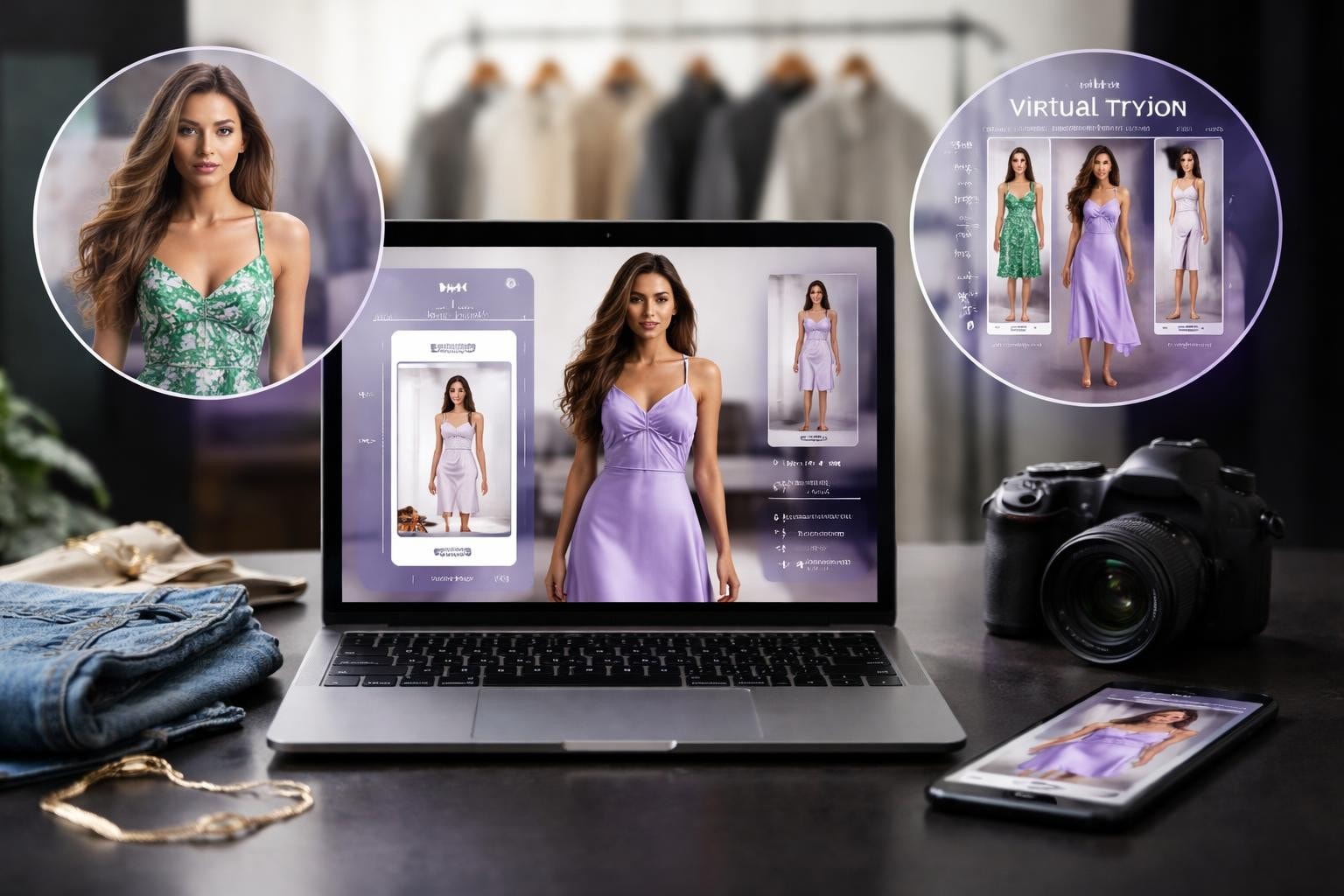
The intersection of retail and fashion has never been more dynamic than in 2026, as artificial intelligence reshapes how brands connect with consumers and deliver compelling shopping experiences. Traditional approaches to product presentation and customer engagement are giving way to sophisticated technologies that enable personalization at scale, immersive visual storytelling, and data-driven decision-making. The retail and fashion industry stands at a pivotal moment where innovation separates market leaders from followers, and brands must adapt quickly to evolving consumer expectations while maintaining operational efficiency and creative excellence.
The Current State of Retail and Fashion Markets
The retail and fashion landscape has undergone significant transformation driven by technological advancement and shifting consumer priorities. According to industry forecasts for retail sales growth, economic factors continue to influence purchasing decisions, creating both challenges and opportunities for brands seeking to expand their market presence.
Consumer behavior patterns have fundamentally changed in recent years. Value-seeking shoppers now expect premium experiences regardless of price point, forcing retailers to reimagine their operational models. The rise of ultra-fast fashion platforms and secondhand marketplaces has disrupted traditional retail cycles, compressing timelines from design to delivery while introducing new sustainability considerations.

Market data reveals compelling trends in digital commerce adoption. The share of apparel and accessories in online retail continues its upward trajectory, with e-retail sales forecasts indicating sustained growth through 2027. This shift demands sophisticated visual presentation capabilities that translate physical product qualities into digital formats effectively.
Key Market Drivers Shaping Industry Evolution
Several forces are converging to redefine retail and fashion success metrics:
- Technological Integration: AI-powered tools enable automated content creation, virtual try-on experiences, and predictive analytics
- Sustainability Demands: Consumers increasingly evaluate brands based on environmental impact and ethical production practices
- Personalization Expectations: Generic marketing approaches fail to engage audiences seeking tailored recommendations and experiences
- Speed to Market: Compressed production cycles require agile systems for product photography, marketing content, and distribution
- Mobile Commerce Growth: Smartphone-driven shopping necessitates optimized visual assets for smaller screens
The Strategy& Fashion Retail Outlook highlights how personalization and livestream shopping have become essential components of successful retail strategies. Brands investing in these capabilities demonstrate stronger customer engagement and conversion rates compared to competitors relying on conventional approaches.
Visual Storytelling as a Competitive Advantage
Visual content serves as the primary communication vehicle between retail and fashion brands and their target audiences. Product imagery influences purchasing decisions more than any other factor in digital commerce, yet many brands struggle to produce sufficient high-quality visuals at the scale required for modern multichannel marketing.
Traditional photography workflows present significant bottlenecks. Scheduling model shoots, managing physical locations, coordinating creative teams, and post-production editing consume substantial time and resources. These constraints limit brands' ability to test multiple creative concepts, respond to trending styles, or personalize content for different audience segments.
The AI-Powered Visual Revolution
Artificial intelligence has introduced transformative capabilities for content creation in retail and fashion contexts. Advanced algorithms can now generate professional model images from simple product packshots, eliminating many logistical challenges while accelerating production timelines. This technological shift enables brands to:
- Scale content production without proportional increases in budget or team size
- Test multiple creative directions simultaneously to identify highest-performing concepts
- Personalize visual assets for different demographic groups, geographic markets, or seasonal campaigns
- Maintain brand consistency across hundreds or thousands of product SKUs
- Reduce time-to-market for new product launches and promotional campaigns
The Lumoo Studio platform exemplifies this evolution, offering comprehensive tools that transform static product photography into dynamic visual narratives. By leveraging features like Lumoo VTO for virtual try-on experiences and Lumoo Flow for automated styled model images, brands can overcome traditional production limitations while maintaining creative control.
| Traditional Photography | AI-Enhanced Production |
|---|---|
| Weeks for shoot coordination | Hours for asset generation |
| Fixed model demographics | Diverse representation options |
| Limited variation testing | Unlimited creative iterations |
| High per-image costs | Scalable pricing models |
| Geographic constraints | Location-independent production |
Personalization at Scale Through Technology
Modern retail and fashion consumers expect experiences tailored to their preferences, browsing history, and purchase patterns. Generic product presentations no longer generate the engagement rates necessary for competitive conversion metrics. Brands must deliver personalized visual content across multiple touchpoints while maintaining operational efficiency.
Size accuracy represents a critical pain point in online fashion retail. Inconsistent sizing standards across brands contribute to high return rates, customer frustration, and increased operational costs. Advanced sizing technology addresses these challenges through data-driven recommendations that improve fit confidence and reduce returns.
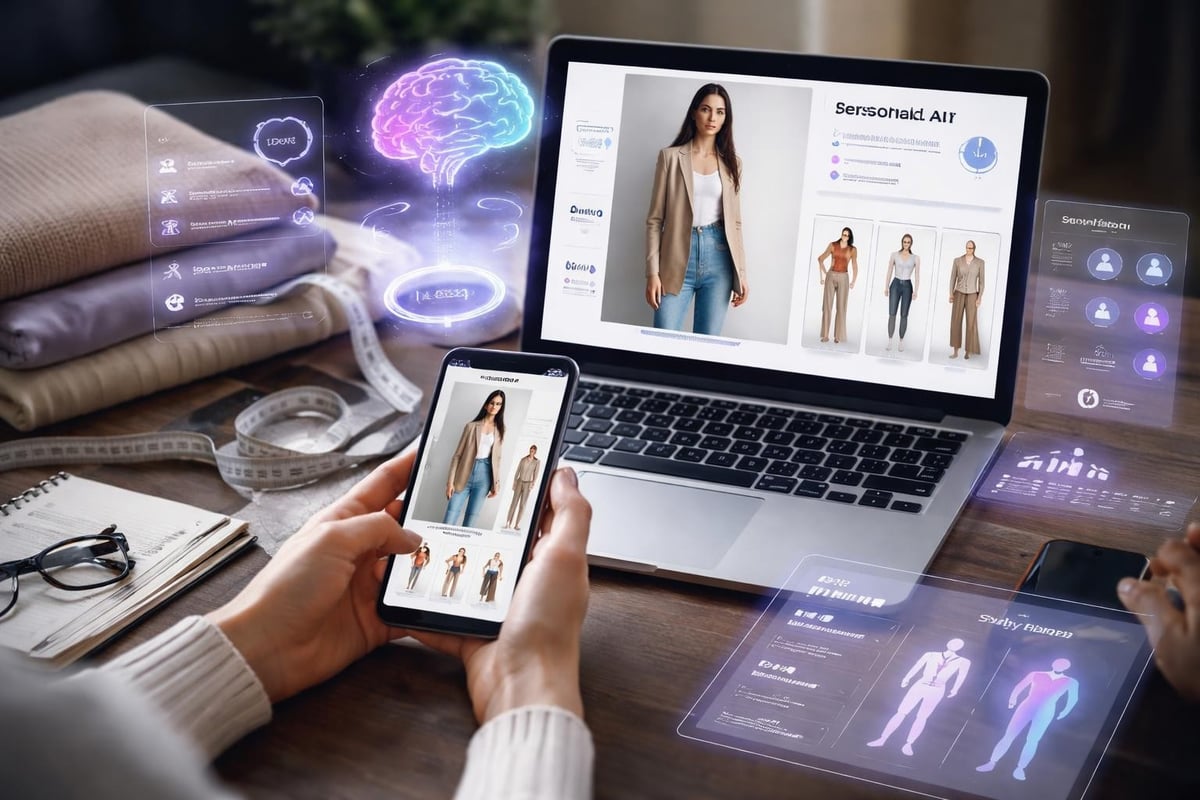
Lumoo Sizes demonstrates how AI can solve complex fitting challenges by analyzing product specifications alongside customer measurements to provide accurate size recommendations. This capability reduces return rates while improving customer satisfaction and brand loyalty.
Creating Dynamic Shopping Experiences
Static product pages have given way to interactive experiences that engage consumers through multiple sensory channels. Video content, 360-degree product views, and augmented reality try-on features create immersive shopping environments that bridge the gap between physical and digital retail experiences.
The retail and fashion sectors increasingly rely on these dynamic formats to:
- Showcase product details that static images cannot capture effectively
- Demonstrate garment movement, drape, and fit across different body types
- Enable virtual try-on experiences that reduce purchase hesitation
- Create shareable social media content that extends organic reach
- Provide styling inspiration through lookbooks and outfit combinations
Technologies like Lumoo Alive bring products to life through animated visuals and video content generated from simple packshots. This automation enables brands to produce engaging content at scale without the traditional costs associated with video production.
Operational Efficiency Through Intelligent Automation
The economic realities of retail and fashion demand operational excellence alongside creative innovation. Brands must optimize every aspect of their value chain to maintain profitability while delivering premium customer experiences. Consumer trends analysis reveals how value-seeking behavior drives retailers to seek efficiency improvements without compromising quality.
Workflow automation eliminates repetitive tasks that consume creative team resources. By delegating routine content production to AI-powered systems, brands free their human talent to focus on strategic initiatives, creative direction, and customer relationship development.
Streamlining Content Creation Workflows
Modern retail operations require thousands of product images across multiple formats, resolutions, and aspect ratios for different marketing channels. Manual production of this content creates bottlenecks that slow product launches and limit promotional flexibility.
Intelligent automation platforms address these challenges through:
- Batch processing capabilities that handle hundreds of products simultaneously
- Format optimization for various platforms including web, mobile, social media, and print
- Brand consistency enforcement through automated styling and composition rules
- Version control systems that manage multiple creative iterations efficiently
- Integration capabilities with existing e-commerce platforms and content management systems
The Lumoo Flow service exemplifies this automation approach, transforming product packshots into styled model images at scale. This capability enables brands to maintain fresh, diverse content without proportional increases in production overhead.
Building Engaging Brand Narratives
Successful retail and fashion brands transcend transactional relationships to build emotional connections with their audiences. Visual storytelling serves as the primary vehicle for communicating brand values, aesthetic vision, and lifestyle aspirations that resonate with target consumers.
Lookbooks have evolved from simple product catalogs to sophisticated narratives that inspire and engage. Modern digital lookbooks incorporate interactive elements, personalized recommendations, and shoppable features that seamlessly transition viewers from inspiration to purchase.
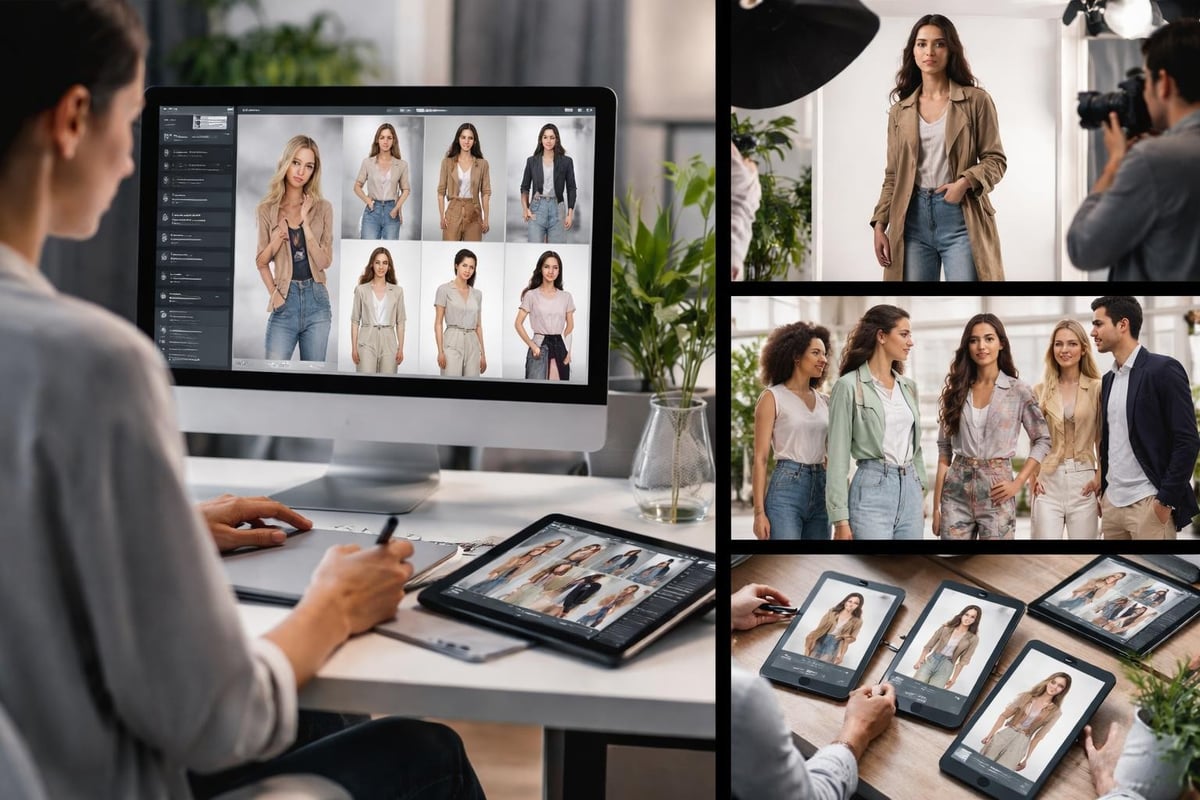
Creating compelling lookbooks traditionally required extensive resources for concept development, location scouting, model casting, photography, and post-production. These requirements limited how frequently brands could refresh their visual narratives or test alternative creative approaches.
Accelerating Creative Iteration
AI-powered content creation enables rapid testing of multiple creative directions without proportional cost increases. Brands can experiment with different styling approaches, model demographics, backgrounds, and compositional choices to identify resonant concepts before committing to large-scale production.
This iterative capability provides several strategic advantages:
- Reduced creative risk through data-driven concept validation
- Faster response to emerging trends and consumer preferences
- Increased diversity in visual representation across campaigns
- Geographic customization for different market aesthetics and cultural preferences
- Seasonal agility enabling rapid refresh of visual content for changing collections
Lumoo StoryLook facilitates this creative process by enabling brands to develop engaging lookbooks that showcase products in aspirational contexts. The platform's AI capabilities ensure consistent quality while allowing extensive customization to match specific brand aesthetics.
The Future of Retail and Fashion Technology
Looking ahead, the convergence of AI, augmented reality, and data analytics will further transform retail and fashion operations. Brands that embrace these technologies gain competitive advantages through improved efficiency, enhanced customer experiences, and deeper market insights.
Virtual try-on technology continues to advance, with improvements in accuracy, rendering quality, and accessibility. These capabilities reduce the uncertainty inherent in online fashion purchasing, addressing a primary barrier to conversion for many shoppers.
Emerging Technology Trends
Several technological developments will shape retail and fashion evolution over the coming years:
| Technology Area | Impact on Retail and Fashion | Implementation Timeline |
|---|---|---|
| Generative AI | Automated content creation, design assistance | Currently deployed |
| Virtual Try-On | Improved fit confidence, reduced returns | Rapidly expanding |
| Predictive Analytics | Demand forecasting, inventory optimization | Increasingly sophisticated |
| AR Integration | Enhanced in-store experiences, virtual showrooms | Growing adoption |
| Blockchain | Supply chain transparency, authentication | Emerging applications |
The brands that successfully integrate these capabilities will define the next generation of retail and fashion excellence. Those clinging to traditional approaches risk obsolescence as consumer expectations continue to evolve alongside technological possibilities.
Strategic Implementation Considerations
Adopting new technologies requires thoughtful planning to ensure positive returns on investment. Retail and fashion brands should consider several factors when evaluating AI-powered solutions:
- Integration compatibility with existing systems and workflows
- Scalability to support growth without performance degradation
- Customization options to maintain brand identity and aesthetic control
- Training requirements for team members who will use the technology
- Performance metrics to measure impact on key business objectives
The Lumoo Studio partner program offers collaborative implementation support to ensure brands maximize value from AI-powered visual content capabilities. This partnership approach recognizes that successful technology adoption requires both sophisticated tools and strategic guidance.
Data-Driven Decision Making
The retail and fashion industry generates enormous volumes of data through customer interactions, sales transactions, website analytics, and social media engagement. Converting this information into actionable insights separates high-performing brands from competitors.
AI systems excel at identifying patterns within complex datasets that human analysts might overlook. These insights inform product development, inventory management, marketing strategies, and customer service improvements.
Measuring Visual Content Performance
Understanding which visual assets drive engagement and conversions enables continuous optimization of marketing investments. Advanced analytics platforms track performance metrics across multiple dimensions:
- Click-through rates on different image styles and compositions
- Conversion rates associated with specific visual treatments
- Engagement patterns across demographic segments
- Time-on-page metrics for various content formats
- Social sharing behavior for different creative approaches
This data creates feedback loops that inform future content creation decisions. Brands can allocate resources toward proven successful formats while experimenting with new approaches on smaller scales to test effectiveness before full deployment.
The activation services offered by Lumoo Studio help brands leverage their visual assets across multiple channels for maximum impact. By understanding how different audiences respond to various content types, brands can optimize their creative strategies for measurable business outcomes.
Building Sustainable Competitive Advantages
The retail and fashion landscape will continue evolving as technology advances and consumer expectations shift. Brands that build sustainable competitive advantages through strategic technology adoption, operational excellence, and authentic customer relationships will thrive regardless of market fluctuations.
Investment in AI-powered visual content capabilities represents more than short-term efficiency gains. These technologies enable fundamental transformations in how brands operate, communicate, and scale their businesses. The ability to produce unlimited high-quality visual assets unlocks new possibilities for personalization, market expansion, and creative experimentation.
Long-Term Strategic Value
Consider the cumulative advantages that accrue to brands leveraging advanced visual content technology:
- Compound efficiency improvements as AI systems learn and optimize over time
- Expanded creative capabilities that would be impossible with traditional methods
- Enhanced brand consistency across growing product catalogs and marketing channels
- Reduced dependency on scarce creative resources and inflexible production schedules
- Faster market responsiveness enabling agile reactions to trends and opportunities
These advantages compound over time, creating widening performance gaps between technology-forward brands and those relying on conventional approaches. The retail and fashion sectors reward innovation, and the current technological moment presents unprecedented opportunities for differentiation.
The transformation of retail and fashion through AI technology represents both a challenge and an opportunity for brands seeking to thrive in increasingly competitive markets. By embracing visual content innovation, operational automation, and data-driven decision-making, forward-thinking companies can deliver exceptional customer experiences while maintaining sustainable business operations. Lumoo Studio provides the comprehensive AI-powered tools brands need to transform ordinary product photography into compelling visual narratives that engage audiences, drive conversions, and elevate market presence across all channels.